Capturing the Essence of a Boat Lake at Sunset Mountain Landscape in Layered Paper Art
The intersection of traditional craftsmanship and modern digital fabrication has opened new avenues for interior design and artistic expression. Among the most compelling trends in this space is the creation of multi-layered paper shadow boxes, specifically those depicting natural scenes. A prime example of this art form is the Boat Lake at Sunset Mountain Landscape, a design that transforms flat sheets of cardstock into a three-dimensional window into nature. This article explores the aesthetic appeal, technical construction, and practical applications of such layered designs, offering insights for creators, hobbyists, and design enthusiasts alike.
The Allure of Wilderness Serenity in Home Decor
In an increasingly digital and fast-paced world, there is a growing consumer desire to bring elements of the outdoors inside. The concept of biophilic design suggests that humans possess an innate tendency to seek connections with nature. Artworks that depict serene wilderness scenes, such as a canoe gliding across calm waters under a golden sunset, serve as powerful anchors for this connection. The visual narrative of paddling away into a world of quietude resonates deeply with outdoor enthusiasts, fishermen, and anyone seeking a moment of mental respite.
The specific imagery of a Boat Lake at Sunset Mountain Landscape is not merely decorative; it is evocative. It captures a transient moment—the "golden hour"—where light interacts with water and land in a uniquely beautiful way. By freezing this moment in a physical medium, artists and designers create a permanent source of tranquility. For homeowners, this translates into a statement piece that can define the atmosphere of an entryway, living room, or rustic cabin. The emotional response elicited by such imagery is a key driver in its popularity as both personal decor and thoughtful gifts.
Understanding the Mechanics of 3D Shadow Box Design
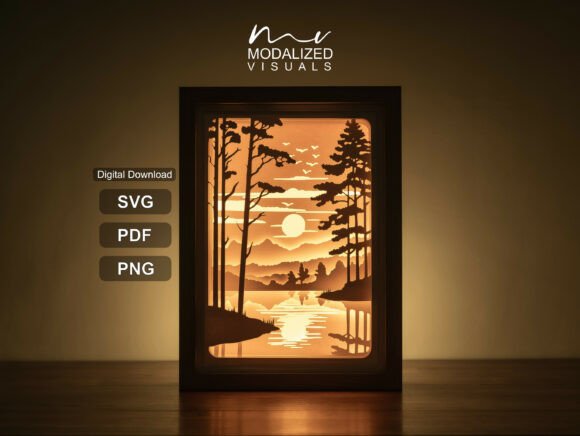
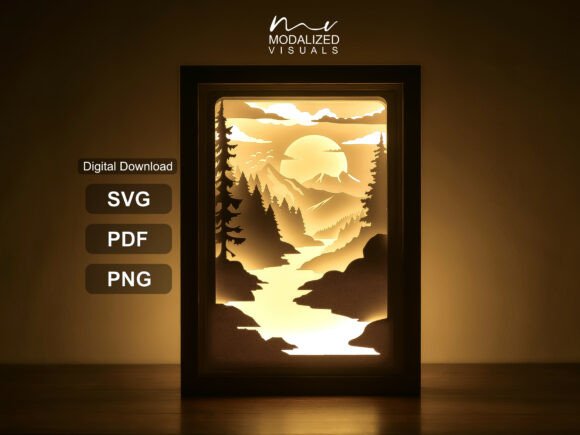
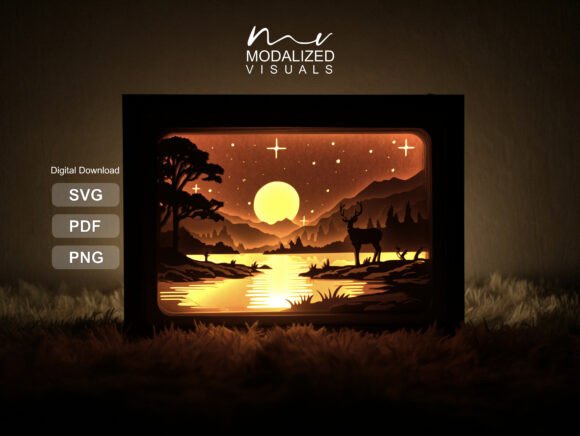
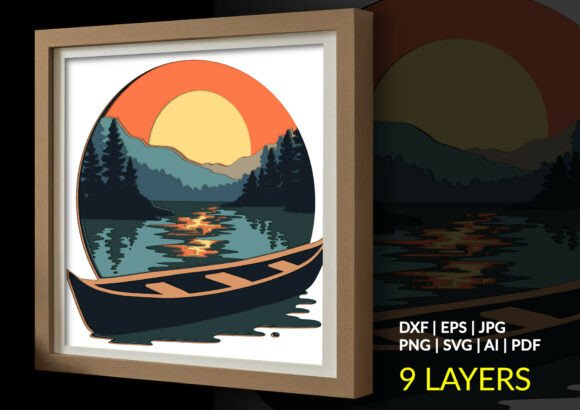
What distinguishes a high-quality shadow box from a simple print is depth. The illusion of three-dimensionality is achieved through layering. In the case of the canoe lake design, the artwork is typically composed of nine distinct layers. Each layer represents a different plane of depth, from the foreground elements to the distant background.
- Foreground Layers: These often include intricate details such as water ripples, reeds, or the immediate shoreline. The precision required here is high, as these elements frame the viewer's entry into the scene.
- Middle Ground: This is where the primary subject resides. In this design, the silhouette of the classic canoe and the paddler are positioned here. The placement is critical; it must appear to float naturally above the water but below the distant mountains.
- Background Layers: Distant mountain ridges and dense pine forests form the backdrop. These layers are usually simpler in cut complexity but crucial for establishing scale and atmosphere. The massive golden sun setting behind these ridges provides the focal point of the lighting scheme.
The use of a circular window view further enhances the immersive quality. It mimics the experience of looking through a porthole or a lens, focusing the eye and excluding peripheral distractions. This framing technique directs attention to the organic curves of the wilderness and the glistening reflections on the water, creating a cohesive and balanced composition.
Digital Fabrication: From Vector Files to Physical Art
The creation of such intricate designs relies heavily on digital fabrication tools. The accessibility of cutting machines like Cricut and Silhouette, as well as professional laser cutters, has democratized the production of complex papercut art. However, the quality of the final product is directly dependent on the quality of the digital files used.
For creators looking to reproduce or customize this Boat Lake at Sunset Mountain Landscape, understanding file formats is essential. A comprehensive design package typically includes several formats, each serving a specific purpose in the workflow:
- SVG (Scalable Vector Graphics): This is the most versatile format for hobbyist cutters. It is compatible with Cricut Design Space and Silhouette Studio, allowing for easy resizing without loss of quality. The vector paths ensure clean cuts, which are vital for maintaining the integrity of delicate details like water ripples.
- DXF (Drawing Exchange Format): Often used by users of older software versions or specific CAD programs, this format ensures compatibility across a wider range of platforms. It is particularly useful for those who do not subscribe to premium design software suites.
- EPS (Encapsulated PostScript): Preferred by professional graphic designers, EPS files are ideal for editing in Adobe Illustrator or Inkscape. They allow for advanced manipulation of nodes and paths, enabling customizations that go beyond simple scaling.
- AI (Adobe Illustrator): As the native file format for Illustrator, this provides the highest level of editability. It is the best choice for professionals who wish to alter the design fundamentally, such as changing the shape of the mountains or adjusting the position of the canoe.
- PNG (Portable Network Graphics): While not used for cutting, high-resolution PNGs with transparent backgrounds are invaluable for previewing the design, creating digital mockups, or using the image in other graphic design projects.
- PDF (Portable Document Format): A well-structured PDF serves as a comprehensive guide. It often includes assembly instructions, layer ordering diagrams, and material recommendations, ensuring that even beginners can achieve a professional result.
Material Selection and Assembly Considerations
While the digital file provides the blueprint, the physical materials bring the Boat Lake at Sunset Mountain Landscape to life. The choice of paper or cardstock significantly impacts the final aesthetic. For a sunset scene, warm tones are paramount. Creators often select a gradient of colors, ranging from deep oranges and yellows for the sky and sun, to cool blues and greens for the water and forests.
Cardstock weight is another critical factor. Too thin, and the layers may warp or fail to hold their shape within the shadow box frame. Too thick, and the cutting machine may struggle with intricate details, leading to torn edges. A weight between 65lb and 80lb is generally recommended for most consumer-grade cutting machines. For laser cutting, heavier stocks or even thin wood veneers can be used to create a more rugged, textured appearance.
Assembly requires patience and precision. Spacers are used between each layer to create the physical depth that defines the shadow box effect. The distance between layers can be adjusted to enhance the perception of distance; greater spacing between the background mountains and the middle-ground canoe can make the landscape feel more vast. Adhesive choice also matters; acid-free glue sticks or double-sided tape are preferred to prevent warping and ensure longevity.
Applications Beyond Traditional Framing
While the most common application for this design is a framed wall hanging, its versatility allows for various creative uses. Educators might use the layered structure to teach principles of perspective and depth in art classes. Hobbyists might incorporate the elements into scrapbooking or journaling, using individual layers as decorative accents.
For business owners in the hospitality industry, such as lodge or cabin rentals, displaying this art reinforces the brand identity of nature and relaxation. It serves as a visual cue that aligns with the guest experience. Furthermore, the design makes for a highly personalized gift. For outdoor enthusiasts, receiving a handmade piece that reflects their passion for canoeing and camping carries significant sentimental value.
The adaptability of the SVG and AI files means that the design can be scaled for different purposes. A smaller version might serve as a decorative ornament or a greeting card insert, while a larger scale could be used for event backdrops or stage design. The key is maintaining the proportional integrity of the layers to ensure the visual harmony remains intact regardless of size.
Optimizing for Clean and Precise Cutting
To achieve the best results when producing this Boat Lake at Sunset Mountain Landscape, optimization of the digital file is crucial. Nodes should be smoothed to reduce unnecessary cut lines, which can weaken the paper structure. Overlapping paths should be merged to prevent double-cutting, which can damage materials and dull blades.
Users should also consider the grain direction of the paper. Cutting against the grain can lead to fraying, especially in intricate areas like the pine forest silhouettes. Testing cuts on scrap material before committing to the final pieces allows for adjustment of blade depth and speed settings. This iterative process ensures that each of the nine layers is cut cleanly, preserving the delicate bridges and connections that hold the design together.
In conclusion, the creation of a layered paper shadow box depicting a serene lake scene is a blend of artistic vision and technical skill. It offers a tangible way to capture the beauty of nature, providing a calming presence in any space. Whether for personal enjoyment, professional decoration, or educational purposes, the Boat Lake at Sunset Mountain Landscape stands as a testament to the power of layered design in evoking emotion and enhancing environments. By understanding the technical requirements and creative possibilities, individuals can fully appreciate and effectively utilize this stunning form of artistic expression.