Transform Your Holiday Decor: A Smart Guide to Christmas House Paper Lanterns
There is a specific kind of magic that happens when soft, diffused light spills out from a miniature paper structure on a winter evening. The Christmas House Paper Lantern has become a staple for this exact reason, offering a cozy, nostalgic aesthetic that plastic inflatables or harsh LED strings simply cannot replicate. Whether you are a DIY enthusiast looking to craft your own village, a small business owner curating holiday inventory, or a parent wanting to create a safe, enchanting centerpiece for the dining table, these 3D structures offer immense creative potential. However, the jump from seeing a beautiful image online to holding a finished, glowing product in your hands often reveals a gap in preparation. Many enthusiasts rush into purchasing or downloading files without understanding the technical nuances, leading to frustration, wasted materials, and projects that never quite look right.
The core appeal of the Christmas House Paper Lantern lies in its versatility. Unlike static decorations, these lanterns interact with light. When designed correctly, the paper acts as a filter, turning a bright bulb into a warm, inviting glow that highlights intricate cutouts of snowflakes, windows, and rooflines. Yet, a common misunderstanding is treating all paper lantern projects as identical. Beginners often assume that any cardstock will work or that any digital file can be scaled infinitely without consequence. This oversight can ruin the structural integrity of the house. If the paper is too thick, it won't fold cleanly along the score lines; if it is too thin, the house may collapse under its own weight or fail to hide the light source inside, creating hot spots rather than a uniform shine.
Navigating Digital Files and Format Compatibility
One of the most frequent stumbling blocks occurs before you even cut your first piece of paper: selecting the right digital assets. In the age of instant downloads, it is tempting to grab the first "cute Christmas house" file you see. However, not all files are created equal, and compatibility issues can halt your project immediately. You might encounter a situation where your Cricut or Silhouette machine refuses to read a file, or your professional printer cannot open the vector data you purchased. This is why verifying file formats is a critical step often overlooked by eager creators.
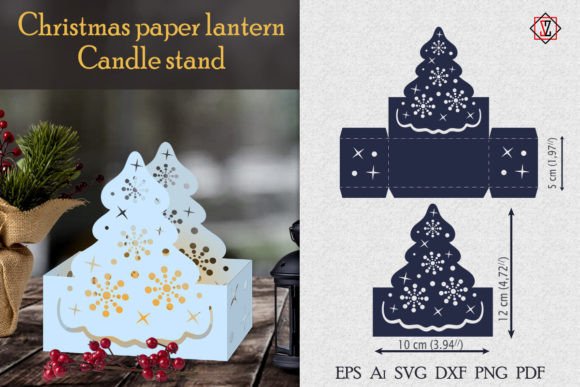
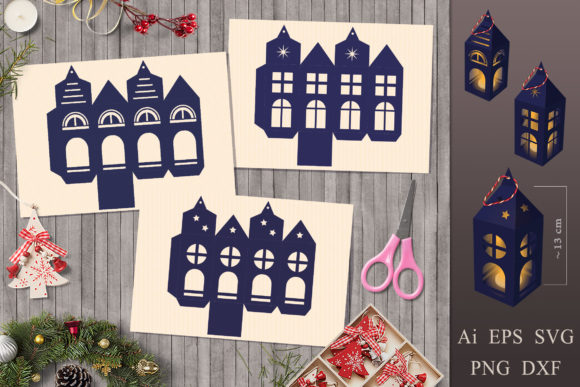
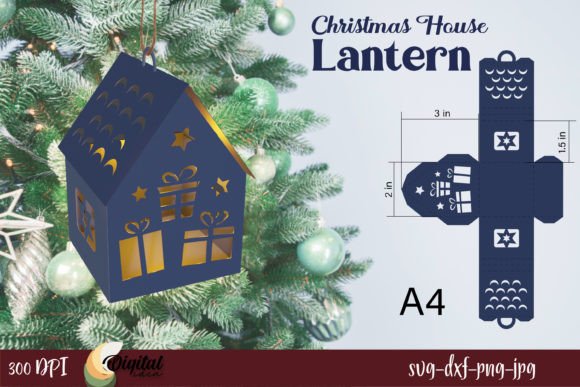
When evaluating a design package, look for comprehensive support. A high-quality resource should provide a zip folder containing the design in multiple formats, such as SVG, DXF, EPS, PDF, JPG, and PNG. Each format serves a distinct purpose. For instance, SVG and DXF are essential for cutting machines, allowing you to scale the house up or down without losing resolution. EPS files are vital for graphic designers using Adobe Illustrator who need to modify vector paths. Meanwhile, PDF is often the best choice for home printing on standard letter or A4 paper, ensuring the dimensions remain accurate. Relying solely on a JPG or PNG for cutting purposes is a mistake; these are raster images that pixelate when enlarged, leading to jagged edges and poor cut quality.
Furthermore, ensure your software and equipment can actually process these files. Older versions of design software may struggle with complex vector nodes found in detailed 3D models. Before committing to a purchase or a download, check the system requirements. If you are a small business owner planning to sell these lanterns, investing in a bundle that includes all these formats future-proofs your workflow. It allows you to adapt the design for different clients—perhaps one needs a large vinyl decal version (requiring EPS) while another wants a physical paper model (requiring SVG).
Structural Integrity and Assembly Pitfalls
Once you have the correct files and materials, the assembly phase presents its own set of challenges. The transition from a flat sheet of paper to a 3D XMas house requires precision. A prevalent error is ignoring the importance of "score lines." In papercraft, a cut goes all the way through the material, while a score is a shallow indentation that allows the paper to fold without cracking. Many free or low-quality templates fail to distinguish between these two clearly. If you cut where you should have scored, your Christmas house will have unsightly gaps at the corners, ruining the illusion of a solid structure. Conversely, if you score where you needed a cut, the tabs won't fit, and the house won't close.
Another aspect often neglected is the light source integration. The primary function of a lantern is to emit light, yet many builders treat the electronics as an afterthought. Placing a battery-operated tea light inside a tightly sealed paper house can be dangerous if the wrong type of bulb is used. Always opt for cool-to-the-touch LEDs. Additionally, consider the placement. If the light sits directly on the floor of the paper house, it may create a bright, glaring spot at the bottom while leaving the roof dark. A better approach is to suspend the light slightly or use a small platform to elevate it, ensuring the glow distributes evenly through the windows and roof vents. For larger installations, running a thin wire for a fairy light string through pre-punched holes can create a more dynamic lighting effect than a single stationary bulb.
Material Selection and Environmental Factors
The choice of paper is arguably the most decisive factor in the final quality of your Christmas House Paper Lantern. While standard printer paper is accessible, it lacks the rigidity needed for a freestanding 3D structure. On the other end of the spectrum, heavy watercolor paper might be too stubborn to fold neatly. The sweet spot is usually a cardstock between 65lb and 80lb cover weight. This weight offers enough stiffness to hold the shape of the roof and walls but remains pliable enough to fold crisply. If you are using a cutting machine, perform a test cut on a scrap piece of your chosen material. Blade depth and pressure settings vary significantly between brands and even between batches of paper.
Environmental factors also play a surprising role. Paper is hygroscopic, meaning it absorbs moisture from the air. If you are crafting these lanterns in a humid environment or storing them in a damp basement, the paper may warp over time, causing the glued seams to pop open. For those intending to keep these decorations for years, applying a light sealant or storing them in climate-controlled containers with silica gel packets can extend their lifespan. Educators and workshop leaders should also note that humidity can affect how well glue sticks; in very dry conditions, white glue may set too quickly, while in humid conditions, it may take forever to cure, leading to sliding parts during assembly.
Making Informed Decisions for Better Results
To ensure your project is a success, adopt a mindset of careful evaluation before execution. When browsing for designs, do not just look at the pretty preview image. Read the description for details on complexity, recommended paper weight, and included file types. If a seller mentions a "zip folder with 1 design in SVG, DXF, EPS, PDF, JPG and PNG," view this as a mark of professionalism and thoroughness. It indicates that the creator understands the diverse needs of their audience, from the hobbyist with a basic printer to the pro with a plotter.
Take the time to dry-fit your pieces before applying any adhesive. Assemble the house loosely to check that all tabs align and the light source fits comfortably. This simple step saves you from the heartbreak of gluing a roof on only to realize the chimney hole is misaligned. Remember, the goal is to create a warm, inviting atmosphere. By paying attention to these technical details—file compatibility, structural scoring, appropriate lighting, and material selection—you move beyond merely making a craft to creating a piece of art. Whether you are decorating your own home or producing items for a holiday market, these precautions ensure that your Christmas House Paper Lantern stands sturdy, glows beautifully, and brings the intended joy to everyone who sees it.